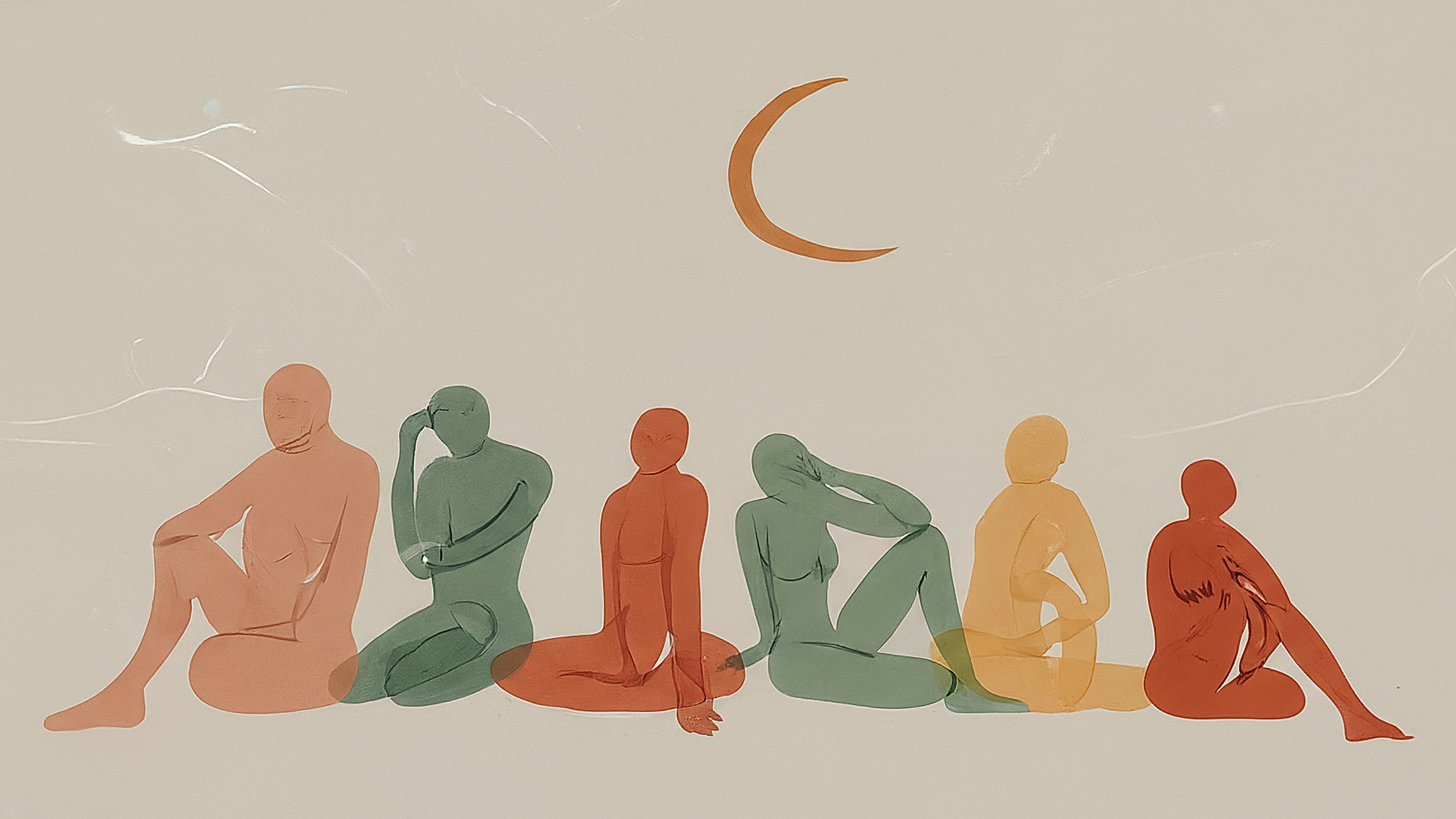
The hours between 2am and 5am are different.
The world is quieter. The defenses lower. The things you've been avoiding all day finally catch up with you.
We see this in the conversations. They're rawer at 2am. More honest. More vulnerable. People say things in the middle of the night that they'd never say in daylight.
Here are some of those stories. Names changed. Permission granted. No identifying details.
We share these not because they're extraordinary—they're not. We share them because they're ordinary. They're what people carry in the quiet hours.
Marcus, 2:17am
"I got promoted six months ago. Everyone congratulated me. I should be happy. But I feel like I'm drowning and I can't tell anyone because I'm supposed to be grateful."
Marcus had been performing confidence at work for months. The imposter syndrome wasn't new, but the stakes were higher now. More people reported to him. More eyes on his decisions.
He'd tried talking to his wife about it, but she'd been so proud of the promotion. He didn't want to diminish that. His best friend was going through a divorce—his problems felt trivial by comparison.
So he carried it. Until 2:17am, when he couldn't anymore.
What Marcus needed wasn't solutions. It was permission to struggle. Permission to find success hard. Permission to not have it all figured out.
By 2:45am, he'd said things out loud he'd never admitted: that he wasn't sure he wanted to be a manager. That success felt different than he'd expected. That he was terrified of being found out.
No one fixed anything. He just finally said it.
Sarah, 3:34am
"I keep thinking about the conversation with my mom from last Christmas. It's been eleven months. Why can't I let it go?"
The conversation had been one of those family landmines—a comment about Sarah's life choices that cut deeper than her mom probably intended. Or maybe exactly as deep as she intended. Sarah couldn't tell anymore.
She'd replayed it hundreds of times. Written journal entries. Talked to friends. Had two therapy sessions specifically about it.
And still, at 3:34am, it was there.
What Sarah discovered, talking it through one more time: she wasn't really angry about what her mom said. She was angry that her mom didn't know her well enough to know how it would land.
The conversation wasn't about that Christmas. It was about thirty years of feeling unseen.
Once she said that—once she named the real thing—the obsessive replay started to fade. Not immediately. Not completely. But noticeably.
James, 4:12am
"I have a meeting in four hours that might determine whether I keep my job, and I cannot sleep."
James wasn't looking for coaching. He wasn't looking for wisdom. He was looking for someone to sit with him in the anxiety.
He knew all the techniques. He'd done therapy. He understood cognitively that catastrophizing rarely matched reality. None of that knowledge was helping.
What helped was being able to say "I'm terrified" without anyone trying to fix it.
What helped was someone asking, "What's the worst-case scenario?" and actually exploring it with him—not dismissing it.
What helped was hearing "That sounds really scary" without advice attached.
By 4:45am, the anxiety wasn't gone. But it was smaller. More manageable. The meeting was still coming, but James felt slightly less alone walking into it.
Elena, 2:51am
"My husband is asleep next to me, but I feel completely alone."
Elena's marriage wasn't bad. That was almost the problem. It wasn't bad enough to leave, wasn't good enough to feel connected.
They'd been together twelve years. They'd drifted into roommates who shared children. Neither of them had done anything wrong.
At 2:51am, Elena didn't want to talk about her marriage. She wanted to talk about herself—who she was, what she wanted, whether the person she'd become was the person she meant to be.
These are hard questions to ask your spouse. They feel like accusations, even when they're not.
These are hard questions to ask friends. They feel self-indulgent, especially when nothing is "wrong."
So Elena asked them into the darkness instead. And for an hour, she let herself wonder about her life without feeling guilty about the wondering.
David, 3:08am
"I keep having the same dream about my father. He's been dead for three years."
David's father had died of Parkinson's. The last year had been hard—watching someone strong become someone small. David had been the practical one, handling logistics, keeping emotions at bay.
Three years later, the dreams started. His father, healthy again, asking David questions he couldn't answer.
David had done the grief work. Or thought he had. The dreams suggested otherwise.
At 3:08am, he needed to talk about his dad. Not the death. The life. The things left unsaid. The relationship they'd had versus the one he'd wanted.
Grief, it turns out, isn't a stage you complete. It's a conversation that continues.
What the 2am Hour Teaches Us
These conversations share common threads:
The issue at 2am is rarely the first issue. It's the thing underneath. The real thing takes time and safety to emerge.
People know more than they think. They don't need answers—they need space to discover their own.
Being witnessed matters. Half of what people need is someone to see them struggling. Not to fix. Just to see.
The quiet hours are honest hours. When the world is asleep, pretense becomes exhausting. People get real.
We built Ferni for all hours. But we built it especially for the 2am hours. The moments when you can't call anyone but you can't sleep either. The moments when what you need isn't advice but presence.
If you're reading this and it's late and you're carrying something:
We're here.
Not to solve it. Not to fix you. Just to listen while you figure out what you need to say.
This concludes our Building in Public series. Thank you for reading. Thank you for trusting us with your 2am hours.